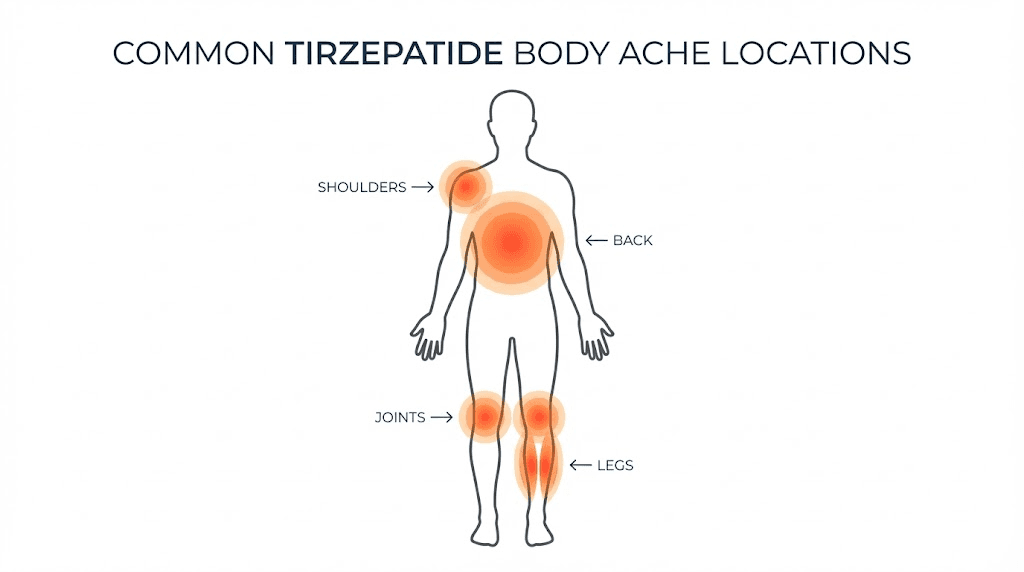
Patients should contact their GP or prescribing clinician if they experience: Severe or persistent cramps that do not respond to simple measures or significantly impact daily activities and sleep quality Frequent cramping occurring multiple times daily or nightly Associated symptoms such as muscle weakness, numbness, tingling, or changes in sensation, which may indicate neurological involvement Visible muscle changes including swelling, redness, tenderness, or asymmetry between legs Signs of dehydration such as dizziness, reduced urine output, dark urine, or confusion These features may indicate underlying conditions requiring investigation, such as significant electrolyte disturbances, peripheral neuropathy (particularly relevant in diabetes), peripheral arterial disease, or, rarely, more serious muscle disorders
Its five main mechanisms of action are as follows: (1) Increases the threshold for migraine attacks by activating different sites on the gamma-aminobutyric acid (GABA) receptors in brain neural tissue, decreasing neuronal excitability, boosting membrane hyperpolarization, and decreasing focal discharges
To regulate the cytokine production in alveolar macrophages and epithelial cells, transient receptor potential channel-1 (TRPC-1) and its associated endogenous Ca 2+ channel play an important role
Days 4-7: establishing the routine By the end of the first week, the physical mechanics should feel more natural
Finally, volume loss can make certain areas look a bit deflated, which can actually make existing cellulite appear more noticeable






/https%3A%2F%2Fopengraph.b-cdn.net%2Fproduction%2Fimages%2F2ed46913-f157-43c3-9418-19fea49af16c.png%3Ftoken%3DUl4O1QAtXTaMUjOfpBooUL-C8jajM-YwYFPrjCtr6ms%26height%3D1080%26width%3D1080%26expires%3D33315971423/og.png)








![Quinlan B. Lee: LEGO STAR WARS: Phonics Box Set [2016] paperback ZGIFT](https://cdn.shopify.com/s/files/1/0616/4001/6057/products/lee-quinlan-b-lego-star-wars-phonics-box-set-9781407164526-40559466807586.jpg?v=1676058102)


